
Cat litter furniture for small spaces cleverly conceals messes and saves room, offering stylish and functional solutions for any home. These clever designs integrate seamlessly into your decor, keeping litter boxes out of sight and freeing up valuable floor space.
Living with a feline friend in a small apartment or home can be a joy, but there’s a common challenge: where to put the litter box? It’s a necessary part of cat ownership, but let’s be honest, it’s not always the most attractive piece of furniture. Thankfully, you don’t have to sacrifice precious floor space or your home’s aesthetic. We’re going to explore some brilliant and budget-friendly cat litter furniture solutions designed specifically for small spaces. Get ready to discover how to make litter box duty a seamless and stylish part of your life!
Why Cat Litter Furniture is a Game-Changer for Small Spaces

In compact living situations, every square foot counts. A standard litter box can take up valuable real estate, be an eyesore, and sometimes, let’s face it, contribute to unwanted odors. Cat litter furniture is designed to tackle these issues head-on. It’s more than just a way to hide the litter box; it’s about creating a functional, attractive, and space-efficient environment for both you and your cat.
These ingenious pieces of furniture can:
- Maximize Floor Space: By integrating the litter box into other furniture items, you free up open floor areas.
- Conceal Odors: Many designs offer improved ventilation or are better sealed, helping to contain smells.
- Enhance Home Decor: Instead of a clunky plastic box, you get stylish furniture that complements your existing style.
- Provide Privacy for Your Cat: Some cats prefer a more secluded spot for their bathroom needs, leading to less stress and potentially fewer accidents.
- Simplify Cleaning: Well-designed furniture can make scooping and changing litter much easier to manage.
Types of Cat Litter Furniture for Small Spaces

The world of cat litter furniture has exploded with creativity, offering a variety of options to suit different needs and aesthetics, especially for smaller homes. Here are some of the most popular and effective types:
1. Litter Box Enclosures (Cabinets & Side Tables)
These are perhaps the most common and versatile solution. They look like regular furniture – end tables, nightstands, or cabinets – but have a hidden compartment inside designed to hold a litter box. They are excellent for concealing the litter box and odors while fitting into existing decor.
How they work:
- A standard litter box is placed inside the furniture piece.
- An opening or entrance allows your cat access.
- The structure helps contain litter scatter and odors.
Pros:
- Great for hiding the litter box completely.
- Often blend in seamlessly with other furniture.
- Can double as a functional surface (e.g., a side table).
- Provides a semi-private space for your cat.
Cons:
- Can be more expensive than a regular litter box.
- May require some assembly.
- Inner dimensions need to be checked to ensure the litter box fits.
- Ventilation might be a concern in some models; consider adding vents or leaving the door ajar.
2. Cat Trees with Integrated Litter Box Hiding Spots
For cat owners with limited floor space but vertical potential, a cat tree with a built-in litter box hideaway is a fantastic dual-purpose item. It provides your cat with climbing, scratching, and resting opportunities while cleverly tucking away their bathroom needs.
How they work:
- A section of the cat tree is designed as a secluded cubby or apartment.
- This cubby is sized to hold a litter box.
- The main structure offers climbing platforms and scratching posts.
Pros:
- Combines essential cat needs (play, rest, bathroom) into one unit.
- Utilizes vertical space, ideal for small apartments.
- Can prevent litter scatter around the base of the tree.
Cons:
- Cleaning the litter box can be more challenging due to height.
- May not fit all litter box sizes.
- Can be bulky and take up significant visual space.
- Not all cats are comfortable using a litter box in a confined, elevated space.
3. Bench-Style Litter Box Enclosures
These ingenious pieces of furniture serve a dual purpose: seating and litter box concealment. A bench can be placed in an entryway, hallway, or living room, providing extra seating while hiding the litter box within its base.
How they work:
- The bench has a partitioned interior to house the litter box.
- A discreet opening allows your cat entry.
- The top of the bench provides seating.
Pros:
- Excellent space-saver, offering seating and litter box solutions.
- Can be a stylish addition to entryways or living areas.
- Hides the litter box completely from view.
Cons:
- Requires a suitable doorway size for your cat.
- Cleaning might be less convenient if the bench needs to be moved or components detached.
- Durability of the seating surface under frequent use should be considered.
4. Corner Litter Box Enclosures
Corners are often underutilized spaces. Corner enclosures are designed to fit neatly into these nooks, making them an efficient use of awkward areas. They can come in various forms, similar to cabinet styles but shaped to hug the wall.
How they work:
- Shaped to fit snugly into room corners.
- Provides a hidden space for a litter box.
- Opens on one or two sides for cat access.
Pros:
- Utilizes often-wasted corner space effectively.
- Keeps the litter box tidy and out of the way.
- Less intrusive than a full cabinet in some layouts.
Cons:
- May limit the size of litter box that can fit.
- Cleaning can be tight depending on the enclosure design.
- Not as aesthetically versatile as other standalone pieces.
5. DIY Solutions and Creative Hiding Spots
For the crafty pet owner, a DIY approach can be a fantastic way to get custom cat litter furniture for small spaces. This could involve repurposing existing furniture or building a unique enclosure from scratch.
How they work:
- Modify an old cabinet, footlocker, or even a sturdy plastic bin.
- Build a simple wooden box with an entrance hole.
- Incorporate ventilation and easy cleaning access as you design.
Pros:
- Highly customizable to fit your exact space and style.
- Can be more budget-friendly.
- Allows for unique design elements tailored to your cat’s needs.
Cons:
- Requires time, tools, and some DIY skills.
- Ensuring proper ventilation and odor control is crucial.
- The finished product’s durability depends on materials and construction.
Key Features to Look For in Small Space Litter Furniture

When selecting litter box furniture for a compact home, several features can make a big difference in functionality and convenience:
Size and Dimensions
This is paramount for small spaces. Measure your intended area and ensure the furniture piece will fit without making the room feel cramped. Crucially, measure the internal dimensions to confirm your current or a suitable litter box will fit comfortably inside. You don’t want to buy an enclosure only to find your cat’s preferred litter box is too large.
Entrance Placement and Size
Consider your cat’s preferences and agility. A larger cat will need a bigger opening. For many enclosed units, a simple, discreet side or front opening is common. Some designs offer double doors for easier access or a more aesthetically pleasing look. If you have a kitten or an older cat with mobility issues, ensure the entrance is low to the ground and easy to navigate.
Ventilation and Odor Control
This is a major concern for any litter box, but especially in small spaces where odors can become concentrated. Look for furniture with built-in ventilation holes, or consider designs that allow you to easily add a carbon filter or ventilation fan. Leaving the door slightly ajar can also help, but this may compromise concealment. Some top-entry designs can also help with odor containment.
Ease of Cleaning
No one wants to struggle to clean a litter box. Opt for furniture that has easy access for scooping and full litter changes. This might mean a removable top, a sliding tray, or a door that swings open wide. If the litter box must be lifted out fully, ensure there’s enough clearance.
Material and Durability
Choose materials that are easy to wipe clean and won’t absorb odors. Wood is a popular choice for its aesthetic appeal, but ensure it’s sealed or treated to resist moisture and urine. Particleboard can sometimes swell or degrade if it gets wet. Look for sturdy construction that won’t wobble or tip, especially in multi-level cat trees.
Stability and Safety
For any furniture, especially if it’s a cat tree or bench, stability is key. Ensure it’s not flimsy and won’t tip over, which could injure your cat. If it’s a DIY project, ensure there are no sharp edges or small parts that could be a hazard.
Step-by-Step Guide to Choosing and Setting Up Your Litter Furniture

Ready to make the switch? Here’s a simple guide to help you find and implement the perfect litter furniture solution for your small space.
Step 1: Assess Your Space and Your Cat’s Needs
- Measure Available Spots: Look for potential locations. Measure the width, depth, and height of these spots. Consider corners, awkward nooks, and under windowsills or desks.
- Observe Your Cat’s Behavior: Does your cat prefer privacy? Do they tend to scatter litter widely? Are they an agile jumper, or do they have mobility issues? This will inform the type of enclosure and entrance needed.
- Consider Existing Furniture: Do you need a piece that doubles as something else, like a side table or bench?
Step 2: Measure Your Litter Box
- Take Precise Measurements: Accurately measure the length, width, and height of the litter box you plan to use. If you’re buying a new litter box, consider a shallower pan for easier entry if your cat is older or smaller.
- Factor in Room for Scooping: Remember to leave a little extra space around the litter box inside the enclosure for easier scooping and to prevent the box from scraping against the sides.
Step 3: Research and Select Your Furniture
- Browse Options Online and In-Store: Look at different types of litter furniture (cabinets, benches, trees, DIY kits). Read reviews from other small-space dwellers.
- Check Internal Dimensions Carefully: This is critical! Ensure the internal space is large enough for your measured litter box plus a little wiggle room.
- Evaluate Features: Prioritize ventilation, ease of cleaning, and stability. For small spaces, multi-functional furniture is a bonus.
- Consider Aesthetics: Choose a style and color that complements your existing decor.
Step 4: Assembly and Placement
- Assemble with Care: Follow the manufacturer’s instructions for assembly. If it’s a DIY project, ensure all parts are secure and any modifications (like cutting entrance holes) are smooth and safe.
- Choose the Right Location: Place the furniture in the spot you identified in Step 1. Ensure it’s stable and not in a high-traffic area where it might disturb your cat or be in your way. Avoid placing it directly next to your cat’s food and water bowls, as cats dislike this.
Step 5: Introduce Your Cat to Their New Bathroom
- Keep it Familiar: Place your cat’s existing litter box inside the new enclosure. You can even add a small amount of their old litter to the new litter to make the scent familiar.
- Make it Accessible: Ensure the entrance is clear. If it’s a cabinet, leave the door open for the first few days so your cat can explore.
- Be Patient: Some cats will adapt immediately, while others may take time. Avoid forcing them.
- Positive Reinforcement: Offer praise or a small treat when your cat successfully uses the new facility.
Step 6: Maintenance & Optimization
- Regular Cleaning: Stick to a regular scooping schedule (at least once daily) and complete litter changes as needed.
- Monitor Ventilation: Ensure that any vents are clear and that there are no persistent odor issues. You might need to add a small fan or a carbon filter.
- Check for Wear and Tear: Periodically inspect the furniture for any damage, instability, or signs of urine seepage that require repair or cleaning.
Popular Options Compared
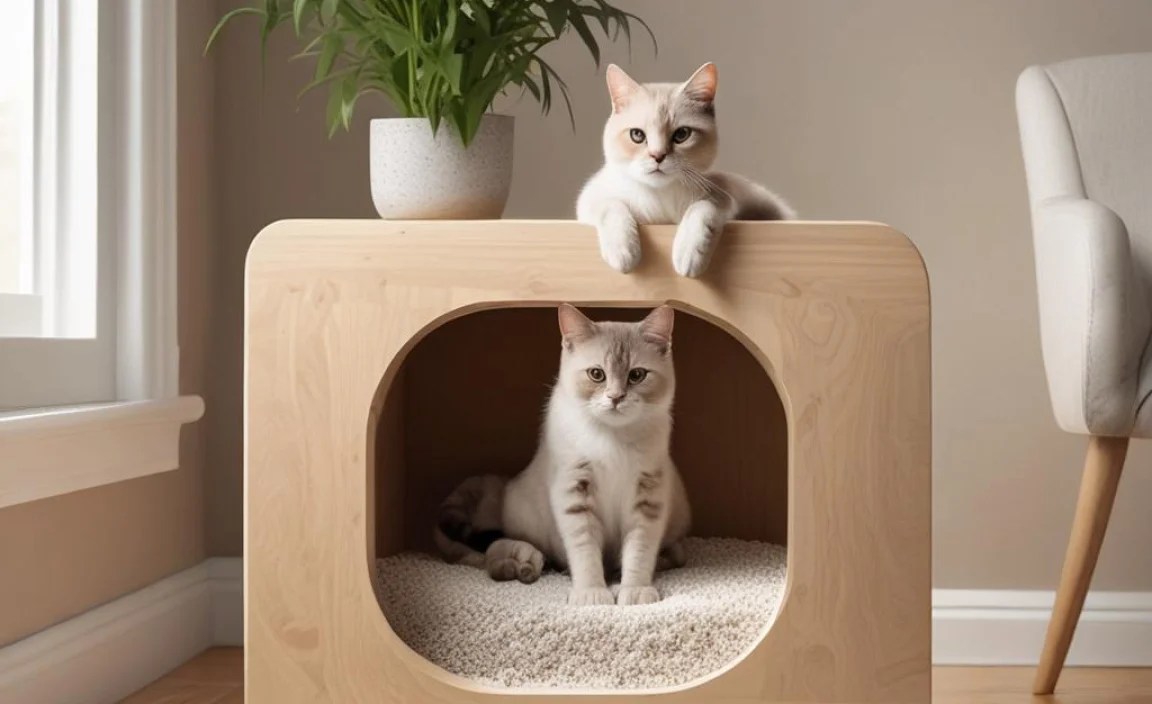
To help you visualize the choices, here’s a comparison of common cat litter furniture types, focusing on their suitability for small spaces:
| Furniture Type | Best For Small Spaces | Pros | Cons | Typical Price Range (USD) |
|---|---|---|---|---|
| Litter Box Cabinet / Enclosure | High – Acts as functional furniture | Hides litter box, controls odor, stylish, can be a surface | Assembly required, inner size limits, ventilation may need boosting | $60 – $250+ |
| Bench-Style Enclosure | High – Dual function (seating/storage) | Space-saving, adds seating, hides litter box completely | Can be heavy, cleaning might be less convenient, requires good access | $80 – $300+ |
| Corner Enclosure | Medium – Utilizes awkward corners | Space efficient in corners, less intrusive visually | Limited litter box size, cleaning can be tight | $50 – $150+ |
| Cat Tree with Hideaway | Medium – Vertical space utilization | Combines play/rest/bathroom, vertical focus | Cleaning can be difficult, bulky, not all cats like elevated boxes | $70 – $200+ |