
A covered cat litter box can be comfortable if you choose the right size, ensure good ventilation, select suitable litter, and introduce it gradually. Proper placement and regular cleaning are key to making your cat feel secure and happy with their enclosed facilities.
Navigating the world of cat care can bring up many questions, and one common puzzle for pet parents is making sure their feline friend is truly comfortable with their litter box. If you’re considering a covered design, you might wonder if it’s a cozy den or a cramped cage for your cat. Many cats are initially hesitant about enclosed spaces, feeling trapped or unsure of their surroundings – and that’s perfectly normal! This guide will walk you through everything you need to know to select, set up, and introduce a covered litter box so your kitty feels right at home. We’ll cover the essential factors that contribute to a cat’s comfort in their private potty space, ensuring a happy cat and a cleaner home for you.
Let’s make litter box duty a breeze!
Why Choose a Covered Litter Box?

Covered litter boxes offer several appealing benefits for both cats and their human companions. For pet owners, they can significantly help in containing odors, preventing litter from being tracked outside the box, and providing a more aesthetically pleasing solution that blends better with home decor. When done right, these enclosed spaces can also offer your cat a sense of privacy and security, which is particularly beneficial for shy or easily startled felines. A covered box can minimize distractions, allowing your cat to do their business without feeling observed or interrupted.
However, it’s crucial to remember that not all cats are fans of covered litter boxes. Their comfort is paramount, and if a box isn’t designed or used correctly, it can lead to avoidance and accidents. Over 85% of cats prefer uncovered litter boxes when given a choice, but this doesn’t mean covered boxes are entirely out of the running. Understanding your cat’s individual personality and needs is the first step to a successful transition.
Key Factors for a Comfortable Covered Litter Box

Creating a comfortable environment for your cat’s covered litter box involves several critical considerations. It’s not just about buying a box and filling it with litter; it’s about understanding feline preferences and environmental needs.
Size Matters – A Lot!
This is arguably the most important factor. A covered litter box should be significantly larger than your cat. A general rule of thumb is that the litter box should be at least 1.5 times the length of your cat, measured from nose to the base of their tail. If the box is too small, your cat won’t have enough room to comfortably turn around, dig, and cover their waste. This can lead to discomfort, stress, and even litter box aversion.
Ideal Dimensions to Look For:
- Length: At least 20-24 inches.
- Width: At least 16-20 inches.
- Height: Ensure the interior height allows your cat to stand and turn easily without their back or head touching the lid.
When purchasing, always check the interior dimensions, as manufacturers’ stated sizes often refer to the exterior. Some brands offer “jumbo” or “extra-large” covered litter boxes that are much better suited for adult cats.
Ventilation is Crucial
One of the biggest complaints about covered litter boxes is that they can trap odors and moisture. Great news! Many modern covered litter boxes come with built-in ventilation systems, often featuring carbon filters. These filters help to absorb and neutralize odors, keeping the air fresher. Look for boxes with vents or small openings that allow for air circulation.
Types of Ventilation Systems:
- Passive Vents: Small openings in the lid or sides that allow for natural air exchange.
- Active Fans: Some high-end models include a small, quiet fan that circulates air and exhausts it through a filter. These are less common but highly effective.
- Removable Doors: While not strictly ventilation, a removable or oversized door can improve air circulation and make the entrance less claustrophobic.
If your chosen box doesn’t have a ventilation system, you can sometimes create your own by leaving the door panel ajar or by periodically opening the lid to allow air to circulate.
Litter Type and Depth
The type and amount of litter can significantly impact a cat’s preference. Most cats prefer unscented, clumping litter with a fine, sand-like texture. This mimics their natural environment and is satisfying for digging and burying. Ammonia levels in urine can be higher in poorly ventilated covered boxes, so consider a litter that is particularly good at odor absorption.
The depth of the litter is also important. Aim for about 2-3 inches of litter. Too little, and your cat won’t have enough to dig in. Too much, and it might be difficult for them to navigate.
Privacy with Access
Covered boxes provide a sense of privacy, which many cats appreciate. However, this privacy should not come at the expense of easy access. The entrance should be large enough for your cat to enter andExit without squeezing or feeling confined. For cats who are elderly, have mobility issues, or are very young, a low-entry threshold is essential.
Door Styles and Their Impact:
- Flap Doors: These offer the most privacy but can be intimidating for some cats. Ensure the flap is lightweight and easy to push through. Some cats may even chew or claw at them.
- Hole-in-Roof Entries: These offer excellent odor control and prevent scattering but can be challenging for older cats or those with joint pain.
- Open Fronts: Some covered boxes have a roof but no door, offering a compromise between privacy and access.
Ease of Cleaning
A comfortable litter box for your cat is also one that’s easy for you to clean. If a box is difficult to scoop or maintain, it’s less likely to be kept hygienic, which will directly impact your cat’s comfort and willingness to use it. Look for models with removable tops or easy-to-open mechanisms for scooping and regular full litter changes.
| Feature | Pros | Cons | Considerations for Comfort |
|---|---|---|---|
| Size (Interior) | Ample space for movement, digging, and turning. | Can be bulky. Needs careful measurement. | Essential. Cat must be able to turn 360 degrees with ease. |
| Ventilation | Reduces odor build-up, improves air quality. | Filters need replacement; some systems are noisy. | Crucial to prevent ammonia buildup and stale air. |
| Litter Type/Depth | Cat preference for texture and burying. | Some litter types can be dusty or tracked. | Fine, unscented clumping litter is usually preferred. 2-3 inches deep. |
| Entry/Door | Privacy, odor containment. | Can be intimidating, restrictive, or difficult for some cats. | Needs to be wide enough and low enough for easy access. |
| Material/Design | Aesthetics, odor resistance. | Some plastics absorb odors over time; some designs are hard to clean. | Smooth, non-porous plastic is easiest to clean. Minimal internal structures. |
Introducing Your Cat to a Covered Litter Box

Transitioning a cat to a new litter box, especially a covered one, requires patience and understanding. Cats are creatures of habit, and forcing a change can lead to stress and avoidance. Here’s a gentle, step-by-step approach:
Step 1: Choose the Right Time
It’s best to introduce a new litter box when your cat is relaxed and during a period of minimal disruption in your home. Avoid introducing it during stressful times like moving, construction, or when introducing new pets.
Step 2: Placement is Key
Place the new covered litter box in the same location as their current litter box, if possible. Cats often associate a specific location with their toileting needs. If you must move it, choose a quiet, low-traffic area where your cat feels safe and has easy access. Ensure it’s not near their food and water bowls or their sleeping area.
Step 3: The Side-by-Side Method
This is the most recommended approach. Set up the new covered litter box next to their existing, familiar litter box. Fill the new box with the same type of litter your cat is currently using. This reduces the number of changes at once.
Step 4: Encourage Exploration
Allow your cat to discover the new box on their own. You can gently place their favorite toy, or a piece of their soiled litter, into the new box to draw their attention to it. Never force your cat into the box.
Step 5: Gradual Transition
Observe your cat’s behavior. If they start using the new covered box regularly, you can gradually remove the old litter box. Wait a few days after they are consistently using the new box before removing the old one. This ensures they have fully accepted the new setup. If they revert to using the old box or have accidents, go back a step and place both boxes side-by-side again.
Step 6: Positive Reinforcement
When your cat uses the new covered litter box, offer quiet praise or a small treat. Positive reinforcement can help create a positive association with the new box.
Step 7: Monitor and Adjust
Pay attention to any signs of stress or avoidance. If your cat seems unhappy, reluctant, or starts having accidents, the covered box may not be the right fit for them, or it might need adjustments. You may need to remove the door panel, improve ventilation, or consider a different design.
Troubleshooting Common Covered Litter Box Problems
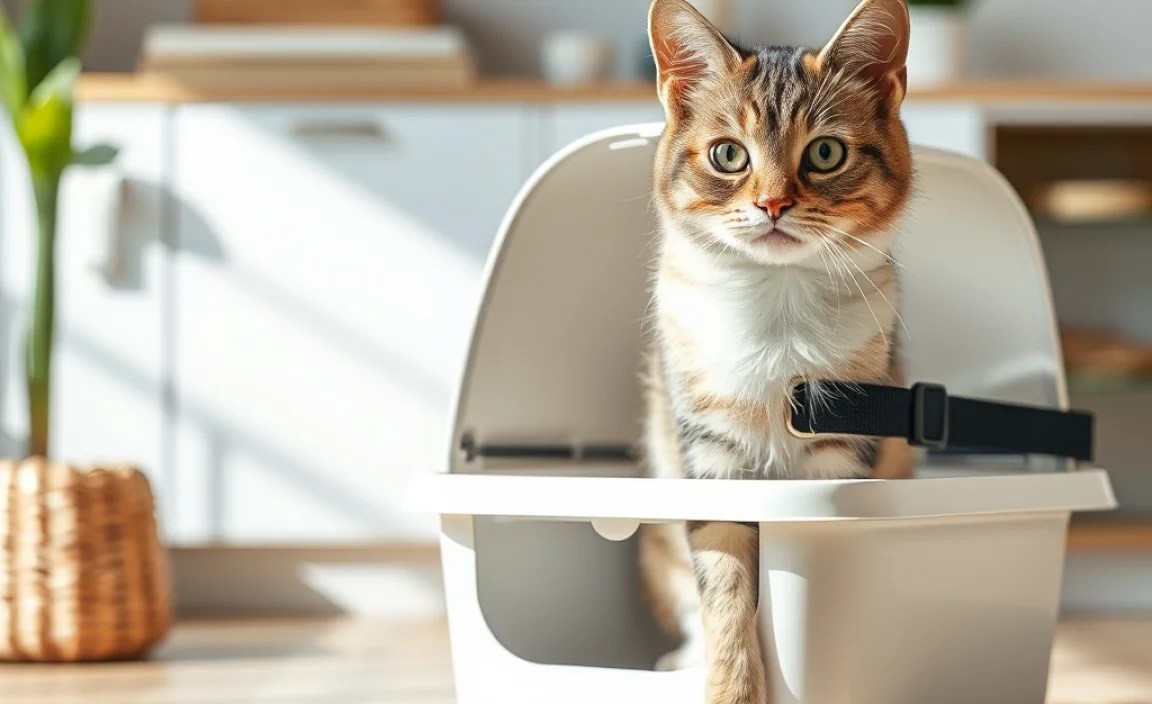
Even with the best intentions, some challenges can arise when using a covered litter box. Here’s how to address them:
Cat Avoids the Box Entirely
Problem: This is the most common issue. Your cat might feel trapped, scared by the enclosed space, or dislike the smell.
Solution: temporarily remove the door or lid to make it more open. Ensure the box is large enough and the entry is easy. Try a different litter. If persistent, revert to an open-top box; a happy cat is more important than a covered box.
Odor Build-Up
Problem: Covered boxes can trap odors, making them unpleasant for both cat and owner.
Solution: Ensure the box has adequate ventilation. Use carbon filters if available and replace them regularly. Scoop the box at least twice a day. Do full litter changes more frequently. Consider an odor-neutralizing litter additive.
Litter Tracking Out of the Box
Problem: Even with a covered design, litter can scatter.
Solution: A litter mat placed outside the entrance can catch stray granules. Some boxes have higher sides or grates at the entrance to further minimize tracking. Ensure the litter depth is appropriate; too much can lead to more scattering.
Cat Digs and Scratches Aggressively
Problem: Some cats have a strong instinct to dig and bury, leading to litter being thrown out of the box.
Solution: A covered box with a higher lip or a more secure lid can help. Litter mats are also useful. Ensure the box is large enough that excessive digging isn’t a result of trying to find a clean spot.
Cat is Afraid of the Door Flap
Problem: The visual or tactile barrier of a flap can be frightening.
Solution: Remove the flap temporarily or permanently. If you want more odor control, you can try a different style of covered box that doesn’t use a flap, or a box with a roof but no door.
Alternative Covered Litter Box Designs

Not all covered litter boxes are created equal. Understanding the variety available can help you find the best fit for your cat’s comfort and your home.
Top-Entry Litter Boxes
These boxes have an opening on the lid, requiring cats to jump up and in.
Pros:
- Excellent at containing litter scatter.
- Excellent at odor containment.
- Cats cannot dig and throw litter out of it.
Cons:
- Can be difficult for kittens, elderly cats, or cats with mobility issues.
- May not be suitable for cats who enjoy digging deeply.
- Requires a jump, which some cats dislike.
See how top-entry boxes work and their advantages at The Humane Society of the United States.
Drawer-Style or Hidden Litter Boxes
These are designed to look like furniture, such as cabinets or end tables, with the litter box hidden inside.
Pros:
- Aesthetically pleasing, blends into home decor.
- Can help contain odors and litter scatter.
- Offers privacy for the cat.
Cons:
- Can be more expensive.
- Cleaning might be more complex depending on the design.
- Requires sufficient ventilation to prevent moisture and odor buildup.
Standard Covered Boxes with Swing Doors
These are the most common type, with a large enclosure and a swinging flap door.
Pros:
- Most familiar design for cats.
- Good balance of privacy and accessibility.
- Widely available in various sizes.
Cons:
- Litter scatter can still occur depending on the seal and door.
- Odors can build up if not adequately ventilated or cleaned.
- Some cats may be intimidated by the flap.
How to Keep a Covered Litter Box Clean, Hygienic, and Comfortable
A comfortable litter box is a clean litter box. Regular maintenance is non-negotiable for feline well-being and odor control.
Daily Scooping is Essential
Scoop out solid waste and urine clumps at least once, preferably twice, a day. Cats are very clean animals and may refuse to use a dirty litter box. For a covered box, this means opening the lid or door panel to access for thorough scooping.
Weekly or Bi-Weekly Full Cleaning
Most experts recommend completely emptying, washing, and refilling the litter box at least once a week for clumping litter, and more often if using non-clumping varieties.
Cleaning Steps:
- Wear gloves and a mask if dealing with strong odors or dust.
- Empty all old litter into a trash bag.
- Wash the litter box thoroughly with mild, unscented soap and hot water. Avoid harsh chemicals or ammonia-based cleaners, as these can scare your cat away.
- Rinse completely to remove all soap residue.
- Dry the box thoroughly.
- Replace the carbon filter if your box has one.
- Refill with fresh litter to the recommended depth (2-3 inches).
Checking for Wear and Tear
Period