
A covered cat litter box with wheels is a fantastic solution for easy cleaning and odor control. It discreetly hides waste while the wheels allow effortless movement for scooping or relocating. This guide simplifies choosing and using one for a happier, cleaner home.
Cats are wonderful companions, but litter boxes can sometimes be a point of contention. Keeping them clean and presentable is key to a harmonious home. If you’re struggling with odor, tracking litter, or simply the hassle of moving a standard box, a covered cat litter box with wheels might be your perfect solution. These innovative designs offer the privacy and odor containment cats love, with the added bonus of convenient mobility for you. Let’s explore how this simple addition can make a big difference in your daily routine and your cat’s comfort. Get ready to discover how easy a tidy litter routine can be!
Why Choose a Covered Cat Litter Box With Wheels?

As pet parents, we’re always looking for ways to make our lives easier and our pets happier. A covered cat litter box with wheels hits a sweet spot for both. These aren’t just fancy plastic boxes; they offer practical benefits that address common litter box woes. Let’s dive into why this specific type of litter box is gaining popularity and why you might consider it for your feline friend.
Benefits for Your Cat
Cats are naturally discreet creatures, and they often prefer a private space to do their business. A covered litter box provides that sense of security and privacy. This can be especially helpful for:
- Shy or Nervous Cats: Some cats feel more comfortable and less exposed when they have a covered space. This can reduce stress during toileting.
- Territorial Cats: A covered box can offer a sense of ownership and territory, which can be calming for certain feline personalities.
- Reducing Litter Tracking: The enclosure helps to contain kicked-up litter, meaning less mess around the house. Many covered boxes also have grated or textured tops, and a door, to help clear litter from paws before your cat exits.
Benefits for You
Let’s be honest, litter box duty isn’t always fun. A covered litter box with wheels is designed to make your job simpler and your home cleaner:
- Odor Control: The primary advantage is superior odor containment. The lid traps unpleasant smells inside, preventing them from wafting through your home. When buying, look for models with carbon filters, as these significantly boost odor absorption.
- Aesthetics: Covered boxes are generally more visually appealing than open ones. They can blend better with your home decor, looking more like a piece of furniture than a litter box.
- Reduced Mess: As mentioned, the enclosure minimizes litter scatter. Some models even have a litter-catching grate on the lid or entrance, further reducing tracking.
- Mobility: This is where the “with wheels” aspect shines! Moving a litter box for cleaning or relocation can be a strain, especially if it’s heavy and full of litter. Wheels make it a breeze to pull out from a tight spot, maneuver for scooping, or move to a new location without heavy lifting.
Features to Look For in a Covered Cat Litter Box With Wheels

Not all covered litter boxes with wheels are created equal. To ensure you get the best model for your needs and your cat’s comfort, consider these key features:
Size and Dimensions
Your cat needs enough room to comfortably turn around, dig, and bury their waste. A good rule of thumb is that the litter box should be at least 1.5 times the length of your cat (from nose to the base of their tail). Wheels can add slight height, so measure your intended space (under a table, in a cabinet) to ensure it fits.
- Interior Space: Ensure the internal dimensions are generous enough.
- Doorway Clearance: The entrance should be wide enough for your cat to pass through easily. Consider if your cat is large or has mobility issues; some doors can be a bit narrow.
- Overall Footprint: Factor in the length, width, and height, including the wheels, when deciding where it will go.
Ease of Cleaning Access
While the wheels help with moving, the design should also facilitate easy scooping and full cleaning. Look for features like:
- Removable Tops: A lid that lifts off or unlatches easily is crucial for quick scooping and thorough cleaning. Some models have a full-hinged design for even better access.
- Drawer Systems: Some high-end models feature a pull-out drawer for the litter, making cleaning more like changing a dustpan. This can be a game-changer for some owners.
- Smooth Interior Surfaces: Non-stick, smooth plastic interiors make it easier to scrape away stuck-on litter and wash the box clean.
Ventilation and Odor Control
A well-ventilated litter box is key to keeping smells at bay. Pay attention to:
- Ventilation Holes: Look for boxes with strategically placed holes to allow air circulation without letting litter escape.
- Carbon Filters: Many covered boxes come with a slot for a replaceable carbon filter. These filters are highly effective at trapping odors. Ensure the filter is easily accessible for replacement. Reputable brands like Cornell Feline Health Center often mention the importance of good ventilation and odor management for cat well-being.
Wheel Design and Durability
The wheels are a defining feature. Consider:
- Number and Type of Wheels: Most have 4 wheels, offering good stability. Look for wheels that swivel for easy maneuverability.
- Locking Mechanism: For added stability when the box is in use or needs to stay put, wheels with a locking feature are ideal.
- Durability: Ensure the wheels and the overall construction are sturdy enough to support the weight of the box, litter, and your cat, especially when pulled.
Entry and Exit Design
How your cat gets in and out matters. Many covered boxes have a swinging door or a cut-out entrance. Some also feature:
- High Sifting Lids: These have holes or grates that help litter fall back into the box as the cat walks across them, reducing tracking.
- Step-in Designs: These have a higher entry point, which can be great for containing litter but might be challenging for very young, elderly, or physically impaired cats.
Top Covered Cat Litter Boxes With Wheels on the Market

Choosing the right product can feel overwhelming with so many options. While models change and new ones emerge, here are some popular types and brands known for their covered designs, often with integrated features that make moving and cleaning easier, even if not all explicitly market wheels. You can often add stick-on caster wheels to many sturdy litter boxes if a specific wheeled model isn’t available.
Popular Styles to Consider
Hooded Litter Boxes with Integrated Base/Drawer: These often look like enclosed cubes or furniture. While not always featuring explicit wheels, their enclosed base can sometimes accommodate aftermarket caster wheels. The drawer mechanism, common in some of these, makes scooping incredibly easy, and then you can pull the entire unit out.
Self-Cleaning Smart Boxes: These high-tech options automate the scooping process. While often pricier, they significantly reduce manual labor. Some larger, sturdier models might have a base that could potentially have wheels added.
Modular Systems: Some brands offer modular litter box systems where you can build upwards or add accessories. Check if wheeled bases are an option for these.
Recommended Brands (Check for Wheeled Models or Adaptability)
Modkat: Known for stylish, modern designs that prioritize odor control and minimal tracking. While direct wheeled models are rare, their sleek, enclosed designs can sometimes be placed on a wheeled dolly.
Litter-Robot: This is a leading self-cleaning option. It’s large and sturdy, and while it doesn’t come with wheels, its substantial base might allow for the addition of heavy-duty caster wheels for easier relocation.
Petmate/Arm & Hammer:™ Often offer budget-friendly hooded litter boxes. Keep an eye out for their larger models; some might have designs that are amenable to adding wheels for extra mobility.
IRIS USA Multi-Cat Litter Box: Some IRIS USA models feature a spacious design and a front-entry door. While not always wheeled, their robust plastic construction often makes them candidates for having aftermarket caster wheels attached to the base if sufficient clearance is available.
Pro Tip: If you fall in love with a fantastic covered litter box that doesn’t have wheels, don’t despair! You can often purchase separate adhesive caster wheels designed for furniture or storage bins and attach them to the base of the litter box yourself. Ensure the box is clean and dry before attaching, and test the stability with a few bags of litter first before adding your cat.
Step-by-Step: Setting Up and Using Your Covered Cat Litter Box With Wheels
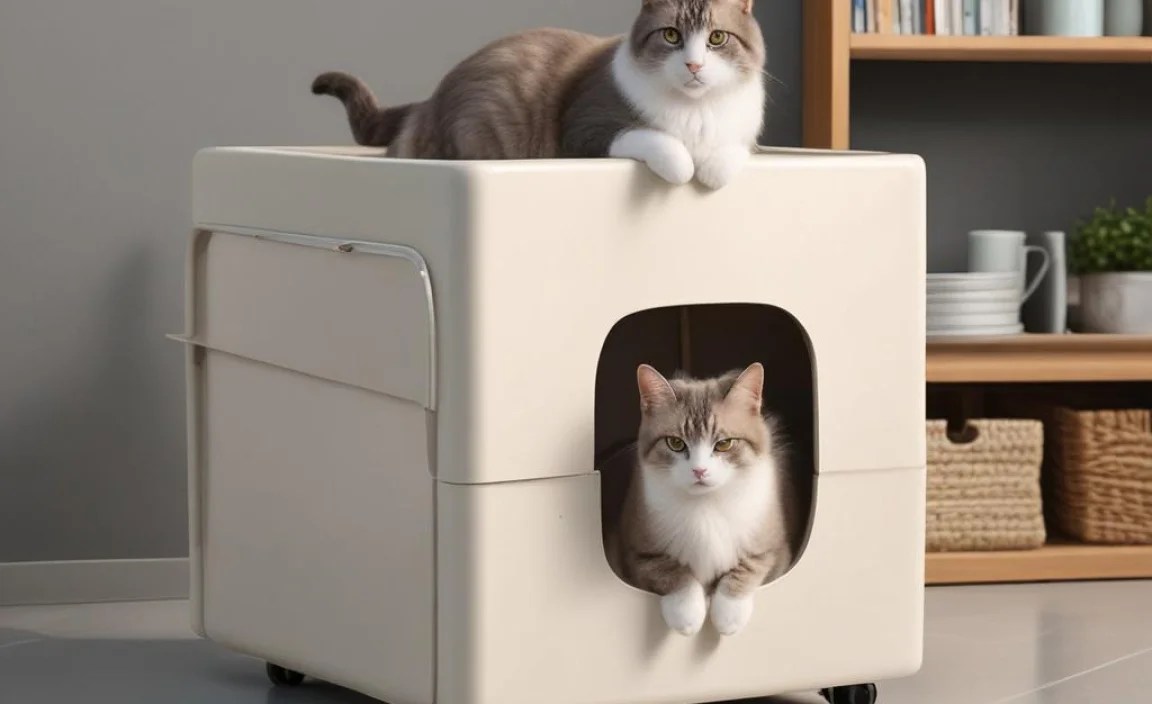
Getting started with a new litter box is simple, especially with the added convenience of wheels. Follow these steps to ensure a smooth transition for your cat and an easy setup for you.
- Assemble and Inspect: Unpack your litter box and any included accessories like filters or scoops. Double-check that all parts are present and that the wheels are securely attached. Gently test the wheels by pulling the empty box to ensure it moves smoothly and stays stable.
- Choose the Right Location:
- Privacy: Select a quiet, low-traffic area where your cat feels safe and won’t be disturbed.
- Accessibility: Ensure there’s enough clearance for your cat to enter and exit comfortably, and for you to access the lid for scooping. Also, consider how much space you need to pull it out.
- Ventilation: While the box itself should have vents, avoid placing it in a completely sealed, unventilated space, as this can trap odors.
- Avoid Food/Water: Never place a litter box near your cat’s food and water bowls. Cats are naturally averse to soiling the areas where they eat and drink.
- Distance from Sleeping Area: Ideally, the litter box should not be right next to where your cat sleeps.
- Add Litter:
- Type of Litter: If you’re switching from an open box, try to use the same type of litter your cat is already accustomed to, at least initially. Avoid heavily scented litters, as many cats prefer unscented. Clumping, fine-grained litter is typically preferred by most cats. A depth of 2-3 inches is usually ideal.
- Amount: Fill the box with your chosen litter to the recommended depth. Most cats prefer about 2-3 inches of litter to dig and bury.
The Humane Society of the United States emphasizes that cats generally prefer unscented, clumping litter and a significant depth for digging.
- Introduce Your Cat:
- Gentle Introduction: Simply place your cat inside the new box and let them explore. You can even sprinkle a little litter from their old box into the new one to transfer their scent.
- Positive Reinforcement: Offer verbal praise or a small treat when your cat uses the new litter box successfully. Avoid punishing them if they have an accident outside the box; this can create anxiety and worsen the problem.
- Regular Maintenance:
- Scooping: Scoop solid waste and clumps of urine at least once a day, ideally twice. This is where the wheels make it easy: pull the box out, scoop, and push it back.
- Filter Replacement: If your box has a carbon filter, replace it regularly according to the manufacturer’s instructions (usually every 4-6 weeks) to maintain optimal odor control.
- Full Cleaning: Dump all the litter, wash the box thoroughly with mild soap and water, and dry completely before refilling with fresh litter. Plan to do this weekly or bi-weekly, depending on the type of litter and usage. The wheels make moving the box to a place for dumping and washing much easier.
Troubleshooting Common Issues
Even with the best equipment, you might encounter a few hiccups. Here’s how to tackle common litter box problems:
Cat Refusing to Use the New Box
- Litter Type: The cat might dislike the new litter. Try switching back to their old litter or experiment with different unscented, clumping varieties.
- Location Stress: The new location might be too noisy, busy, or inaccessible. Try moving the box to a quieter, more private spot.
- Scent Issues: Ensure the box is thoroughly cleaned to remove any manufacturing smells. Avoid harsh cleaning chemicals; use mild soap and water.
- Doorway Phobia: Some cats are hesitant about swinging doors or enclosed spaces. Try temporarily removing the door or leaving it ajar.
- Reinforce Positive Associations: Continue to praise and reward your cat for using the box.
Increased Litter Tracking
- Better Litter Mat: Invest in a deep-grooved or multi-layered litter mat to place in front of the box entrance.
- Sifting Grid/Lid: Ensure the litter-catching features on the lid or entrance are working effectively. Some boxes have removable grates; ensure yours is in place.
- Different Litter Size: Larger pellet-style litters may track less than fine grains, though not all cats adapt well to them.
- Paw Trimming: For severe cases, trimming the fur between your cat’s paw pads can help reduce how much litter adheres. Consult your vet or a professional groomer.
Lingering Odors
- Filter Maintenance: Ensure the carbon filter is present and hasn’t reached its lifespan’s end. Replace it if necessary.
- Scooping Frequency: Increase how often you scoop. Daily scooping is great, but twice a day is even better for odor control.
- Deeper Cleaning: Ensure you’re washing the entire box periodically with mild soap and water. Some pet-safe enzymatic cleaners can help neutralize stubborn odors.
- Litter Type: Some litters are simply better at odor control than others. Research highly-rated unscented, odor-controlling litters.
- Litter Depth: Ensure you have enough litter in the box. A shallow litter bed traps less odor.
Wheels Not Moving Smoothly
- Debris: Check the wheels for any accumulated hair, dust, or debris. Clean them thoroughly.
- Uneven Surface: Ensure the floor surface is even. Wheels can stick on thick carpets or uneven tiles.
- Weight Distribution: Make sure the litter box isn’t overloaded in a way that puts uneven pressure on the wheels.
- Stuck Lock: If your wheels have a locking mechanism, ensure it’s fully disengaged before attempting to move the box.
Maintaining Your Covered Cat Litter Box With Wheels
Consistent maintenance is key to a clean home and a happy cat. The wheeled nature of your litter box makes these tasks far less burdensome. Here’s a breakdown of what you need to do:
Daily Tasks
These are the quick, essential jobs:
Scoop: Use a litter scoop to remove solid waste and urine clumps. Pull the box out, scoop, and push it back. This takes less than a minute.
Surface Sweep: If minor litter scatter occurs, quickly sweep it up or use a small handheld vacuum.
Weekly/Bi-Weekly Tasks
These tasks ensure a truly clean environment:
Filter Check/Replacement: If your box has a carbon filter, check its condition. Replace it as recommended by the manufacturer (typically monthly).
Full Litter Change and Wash:
1. Pull the box completely away from its usual spot using the wheels.
2. Dump the old litter into a disposal bag or bin.
3. Using a hose or sink, wash the entire litter box and lid with warm water and a mild, unscented soap. Avoid harsh chemicals or ammonia-based cleaners, as these can deter cats from using the box. For stubborn residue, use a plastic scraper or brush.
4. Rinse thoroughly to remove all soap residue.
5. Dry the box completely with a clean towel or allow it to air dry in the sun.
6. Refill with fresh litter to the desired depth (2-3 inches).
7. Place the lid back on, ensure filters are in place, and push the unit back into its spot.
Monthly Tasks
This is typically when filter replacements are needed, but it’s a good time to:
Deep Clean Wheels: Briefly inspect the wheels for any embedded debris. A quick wipe-down can keep them rolling smoothly.